Caucasus Tour Guide: Georgia, Armenia and Azerbaijan in One Trip
Between the Black Sea and the Caspian, the mountains of the Caucasus shelter three small countries with enormous character. Azerbaijan is the “Land of Fire”, with a futuristic capital on the Caspian shore. Georgia charms visitors with its hospitality, wine and churches perched on mountaintops. Armenia, the first nation to adopt Christianity as a state religion, is full of ancient monasteries under the shadow of Mount Ararat. Only a short flight from Istanbul, the region is perfect for a one- to two-week journey. This Caucasus tour guide explains how to combine the three countries and what not to miss.
One trip, three countries: how the route works
The key to planning is geography and politics. Georgia shares borders with both Azerbaijan and Armenia, but the border between Azerbaijan and Armenia is closed. So most itineraries follow a line through Georgia: Baku → Sheki → Tbilisi → Yerevan, or the reverse. Travellers fly into Baku and out of Yerevan (or vice versa), crossing the Azerbaijan–Georgia and Georgia–Armenia borders by road. This avoids backtracking and lets you enjoy beautiful countryside between the capitals.
Azerbaijan: the Land of Fire
Baku
Baku’s walled Old City (İçərişəhər), a UNESCO World Heritage Site, hides the Maiden Tower and the Palace of the Shirvanshahs within its narrow lanes. Outside the walls, the city has reinvented itself with oil wealth: the seaside boulevard, the Flame Towers that light up at night and Zaha Hadid’s flowing Heydar Aliyev Center.
Fire and stone around Baku
On the Absheron Peninsula, Yanar Dag is a hillside where natural gas has burned for decades, and the Ateshgah is a historic fire temple. South of the city, Gobustan National Park protects thousands of prehistoric rock carvings, and nearby you can see bubbling mud volcanoes.
Sheki
In the green foothills of the Greater Caucasus, Sheki is famous for the Palace of the Sheki Khans with its stained-glass windows, its historic caravanserais and its sweet halva. The historic centre is a UNESCO site.
Georgia: wine, mountains and hospitality
Tbilisi
Georgia’s capital climbs the slopes of the Mtkvari River gorge. Explore the old town with its carved wooden balconies, take the cable car up to Narikala Fortress, relax in the domed sulphur baths of Abanotubani and enjoy Georgian supra feasts with khachapuri and khinkali.
Mtskheta
The ancient capital and spiritual heart of Georgia lies just outside Tbilisi. Svetitskhoveli Cathedral and the hilltop Jvari Monastery, both UNESCO-listed, look down on the meeting of two rivers.
Kazbegi and the Georgian Military Road
The road north passes the fortress of Ananuri and the ski resort of Gudauri before reaching Stepantsminda (Kazbegi). Here the Gergeti Trinity Church stands on a ridge beneath the glaciers of Mount Kazbek, one of the most iconic views in the Caucasus.
Kakheti, the wine region
Georgia has one of the world’s oldest winemaking traditions, using clay qvevri vessels buried in the ground, a method recognised by UNESCO. The hilltop town of Sighnaghi and the monasteries of Kakheti make a lovely day trip. Non-drinkers can enjoy fresh fruit juices, churchkhela sweets and the scenery.
Armenia: land of monasteries
Yerevan
Built from pink tuff stone, Yerevan is a lively city of cafés and fountains. Climb the Cascade for views of Mount Ararat, visit the Matenadaran with its ancient manuscripts and pay your respects at the Armenian Genocide Memorial.
Echmiadzin, Garni and Geghard
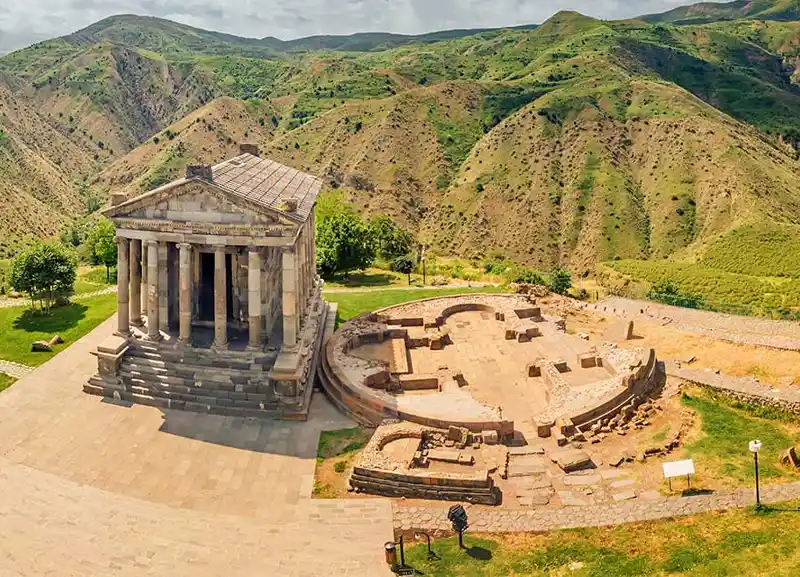
Echmiadzin is the seat of the Armenian Apostolic Church, and its cathedral is among the oldest in the world. Garni is a Greco-Roman temple above a dramatic gorge, while Geghard Monastery is partly carved into the mountain rock; both are classic day trips from Yerevan.
Khor Virap and Lake Sevan
Khor Virap Monastery offers the closest and most famous view of Mount Ararat. Lake Sevan, one of the largest high-altitude freshwater lakes in the world, is crowned by the Sevanavank monastery on its peninsula.
Suggested itinerary: 10 days
- Day 1–2: Baku and the Absheron Peninsula, Gobustan.
- Day 3: Drive to Sheki.
- Day 4: Cross into Georgia, Sighnaghi and Kakheti, on to Tbilisi.
- Day 5: Tbilisi.
- Day 6: Mtskheta, Ananuri and Kazbegi.
- Day 7: Cross into Armenia via Haghpat or Sanahin monasteries, Dilijan and Lake Sevan.
- Day 8: Yerevan.
- Day 9: Echmiadzin, Garni, Geghard and Khor Virap.
- Day 10: Departure from Yerevan.
Shorter programmes focus on two countries, such as Azerbaijan and Georgia or Georgia and Armenia. See our Caucasus tours for current departures.
Practical tips
- Visas: Rules differ by country and nationality. Azerbaijan offers an e-visa system for many nationalities, while Georgia and Armenia allow visa-free entry or e-visas for many travellers. Check the latest requirements for your passport before booking.
- Currencies: Azerbaijani manat (AZN), Georgian lari (GEL) and Armenian dram (AMD). Cards work in cities; carry cash in villages.
- Border etiquette: When entering Azerbaijan, avoid carrying items or stamps that may raise questions related to the Nagorno-Karabakh conflict; your tour leader will brief you.
- Best season: May to October. Mountain roads to Kazbegi can close in winter, though Tbilisi, Baku and Yerevan are pleasant city-break destinations all year.
- Food: Azerbaijan is a Muslim-majority country with halal food everywhere; in Georgia and Armenia, ask your guide for halal or vegetarian options, which are easy to arrange in advance.
Combine the Caucasus with Türkiye
Because flights from Istanbul take only around two to three hours, many travellers add the Caucasus to a Türkiye tour. Mariposas Tour organises group and private trips to Georgia, Azerbaijan and Armenia. Contact us for a tailor-made itinerary.
Food and hospitality in the Caucasus
Meals are a highlight of any Caucasus tour. In Azerbaijan, try plov (saffron rice with meat and dried fruit), dolma, lavangi stuffed fish and endless glasses of black tea served with jam. Georgian cuisine is famous throughout the former Soviet world: cheese-filled khachapuri, juicy khinkali dumplings, walnut-based sauces and fresh herbs at every meal, all served at long tables where a toastmaster, the tamada, leads heartfelt toasts. Armenian food features grilled khorovats, lavash bread baked in a tonir oven (recognised by UNESCO), apricots and dried fruit. Across the region, hospitality is a point of pride: guests are often treated as a gift, and you may be invited for tea or fruit by people you have only just met. A good local guide will help you discover family-run restaurants and village homes where these traditions are at their warmest.
Frequently asked questions
Can you visit Georgia, Armenia and Azerbaijan in one trip?
Yes, but because the Azerbaijan–Armenia border is closed, you travel through Georgia: for example Baku – Tbilisi – Yerevan, flying in and out of different cities.
How many days do you need for a Caucasus tour?
Seven days is enough for two countries; ten to twelve days lets you see the highlights of all three.
Is the Caucasus a good destination for Muslim travellers?
Yes. Azerbaijan is a Muslim-majority country with mosques and halal food everywhere, and halal meals can be arranged in Georgia and Armenia.
What is the best time to visit the Caucasus?
Late spring to early autumn (May to October) is best, especially for mountain areas such as Kazbegi.